

A group of prisioners will collaborate in the analysis of sediments from the La Malia site (Guadalajara) in an initiative that brings together research on the earliest Homo sapiens and social inclusion
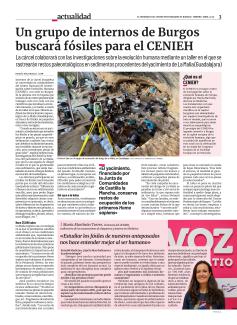
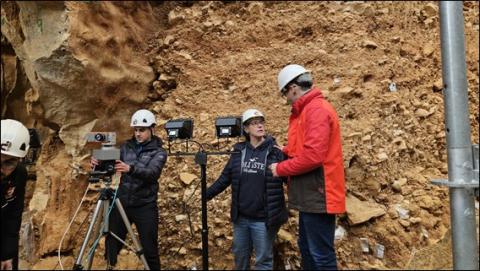
A group of people at Burgos Prison will collaborate with the Centro Nacional de Investigación sobre la Evolución Humana (CENIEH) in a pioneering project in Spain: the search for fossils and archaeological remains from the La Malia site (Guadalajara).
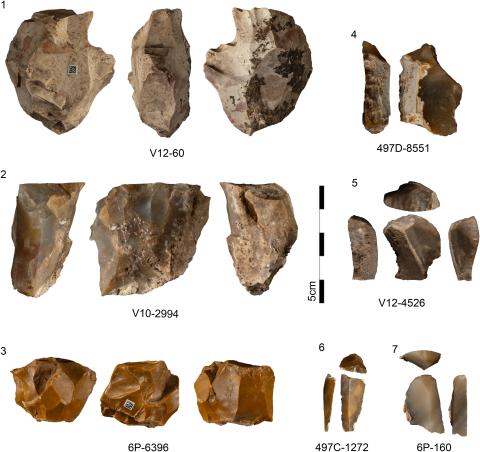
Under the direction of researcher Nohemi Sala, the prisoners will receive specialised training to sieve and examine sediments in search of microvertebrates, small lithic artefacts, charcoal remains and seeds. This meticulous and essential work is key to reconstructing the climate and environment in which the earliest Homo sapiens inhabited the interior of the Iberian Peninsula approximately 35,000 years ago.
Each excavation campaign at La Malia recovers more than 500 kilograms of sediment which, after washing and sieving, is transformed into a “concentrate” ready for analysis under a binocular microscope. From now on, this process will benefit from new hands and new opportunities.
This pilot project combines scientific research with social commitment, extending the study of human evolution to new settings and demonstrating that knowledge can also serve as a powerful tool for inclusion and personal development for people in prison. As María Martinón-Torres, Director of CENIEH, points out, “Studying the fossils of our ancestors helps us better understand what it means to be human.”