
  • About CENIEH
    • Organization
    • HRS4R
    • Staff
    • Vacancies
    • Transparency
    • Anti-fraud plan
    • Call for Tenders
    • Quality and Preventive health policy
    • Security policy
    • Data Protection Policy
    • How to find us
  • Research
    • Lines of research
    • Archeological sites
    • Publications
    • Projects
    • Teaching
    • UCC+I
  • Infrastructure
    • Laboratories
    • Collections
    • Access and User Office
    • Consultation and rates
    • Projects
    • Library
    • Virtual tour
  • Media
    • News
    • Events
    • Press room
    • Other publications

Pie de página

  • Home
  • Directory
  • Anti-fraud channel
  • Suggestions mailbox
  • Intranet
Home
Home

Buscar

  • en
  • |
  • es

Buscar

Menu Superior

  • Home
  • Directory
  • Anti-fraud channel
  • Suggestions mailbox
  • Intranet
  • About CENIEH
  • Research
  • Infrastructure
  • Media
  • Organization
  • HRS4R
  • Staff
  • Vacancies
  • Transparency
  • Anti-fraud plan
  • Call for Tenders
  • Quality and Preventive health policy
  • Security policy
  • Data Protection Policy
  • How to find us
  • Lines of research
  • Archeological sites
  • Publications
  • Projects
  • Teaching
  • UCC+I
  • Laboratories
  • Collections
  • Access and User Office
  • Consultation and rates
  • Projects
  • Library
  • Virtual tour
  • News
  • Events
  • Press room
  • Other publications

Cannibalism of Homo antecessor was not due to food shortage

Wednesday, 03 April 2013
Cannibalism of Homo antecessor was not due to food shortage

Researchers from the Paleoecology and Paleophysiology groups at the Centro Nacional de Investigación sobre la Evolución Humana (CENIEH) has published the work "Modeling trophic resource availability for the first human settlers of Europe: The case of Atapuerca-TD6" in the Journal of Human Evolution stating that cannibalism of Homo antecessor was not due to periods of famine, as there was plenty of food resources in Atapuerca 800,000 years ago.
Latest news

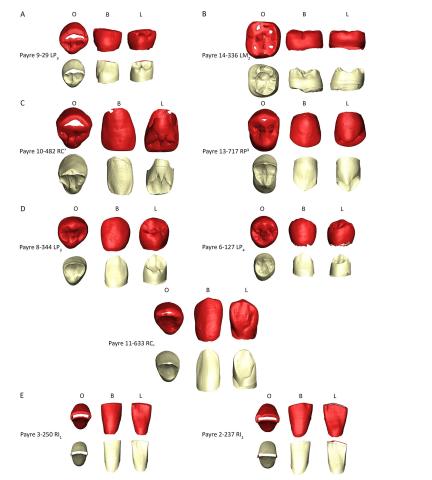
Human dental remains recovered from the Payre site (France) included in the study / Martín-Francés et al
Payre fossils reveal the characteristic diversity of Europe’s earliest Neanderthals
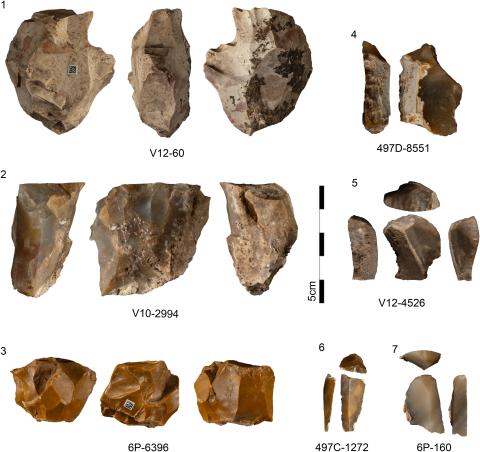
Sample of artefacts on evaporitic chert from the Upper Palaeolithic sequence of Cova Gran.
Flint reveals changes in human mobility in the southern Pyrenees during the Upper Palaeolithic
Montaje Cámara hiperespectral en Gran Dolina/Alfonso Benito
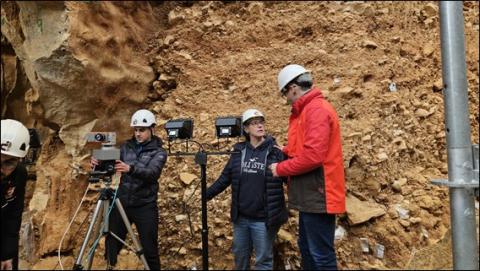
Researchers analyse the oldest levels of the Gran Dolina Site using infrared sensors
Gallareto-Sande et al AR2026-Bruner
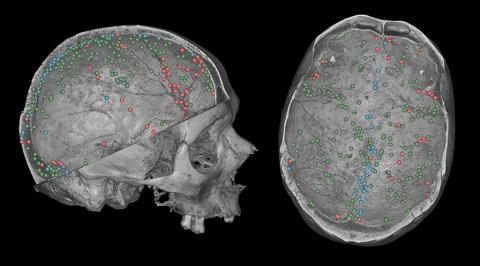
Blood microvessels in the cranial cavity responsible for the brain’s immune function described for the first time
Ana Pantoja Pérez
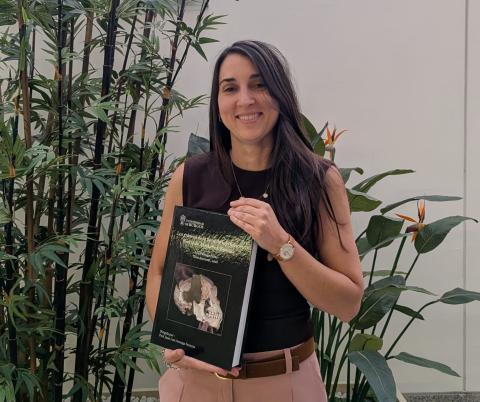
Ana Pantoja awarded a PhD for a thesis on the Sima de los Huesos crania
  • About CENIEH
    • Organization
    • HRS4R
    • Staff
    • Vacancies
    • Transparency
    • Anti-fraud plan
    • Call for Tenders
    • Quality and Preventive health policy
    • Security policy
    • Data Protection Policy
    • How to find us
  • Research
    • Lines of research
    • Archeological sites
    • Publications
    • Projects
    • Teaching
    • UCC+I
  • Infrastructure
    • Laboratories
    • Collections
    • Access and User Office
    • Consultation and rates
    • Projects
    • Library
    • Virtual tour
  • Media
    • News
    • Events
    • Press room
    • Other publications
Ministerio de Ciencia e Innovación Junta de Castilla y León

Contact

Centro Nacional de Investigación sobre la Evolución Humana, CENIEH

Paseo Sierra de Atapuerca, 3

09002 Burgos, España

Tel: +34 947040800

Fax: +34 947040810

contacto@cenieh.es

Legal warning
Cookies policy