

CENIEH has led a new micro-CT analysis of fossil teeth from the French site of Payre, revealing biological links between different European human populations and confirming that Neanderthal evolution was neither linear nor uniform
The Centro Nacional de Investigación sobre la Evolución Humana (CENIEH) has led the international team behind a new study published in Archaeological and Anthropological Sciences exploring the complex evolution of Neanderthals in Europe. Based on the analysis of fossil teeth discovered at the archaeological site of Payre, in south-eastern France, the research provides new insights into the diversity and evolution of Neanderthal populations during the Middle Pleistocene, around 250,000 years ago.
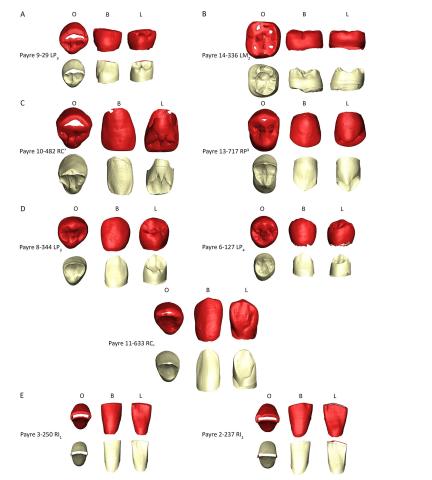
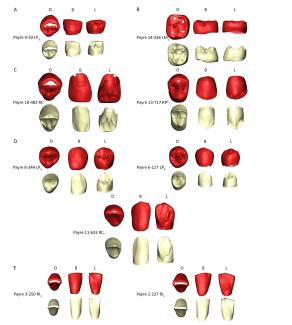
The study, which also involved institutions from France and Australia, re-examined nine fossil teeth recovered from different archaeological levels at the site using advanced imaging techniques and morphometric analyses.
“By combining micro-computed tomography (micro-CT), geometric morphometrics and analyses of dental tissue proportions, we were able to investigate both the external morphology and internal dental structure of the Payre teeth with an unprecedented level of detail,” says Laura Martín-Francés Martín de la Fuente, lead author of the study.
The results suggest that Neanderthal evolution was far more dynamic and regionally diverse than previously thought, reinforcing growing evidence that Neanderthal populations in Europe were strongly influenced by Middle Pleistocene climatic oscillations. These environmental changes repeatedly altered landscapes and migration routes, promoting both isolation and interaction between populations.
Neanderthal variability
Scientists have long debated whether European populations from the so-called Marine Isotope Stage 7 (MIS 7), a period dating from around 240,000 to 200,000 years ago, already displayed the anatomy characteristic of ‘classic’ Neanderthals or whether they still retained traits inherited from earlier human groups.
The new study shows that the Payre teeth share numerous anatomical similarities with other Middle Pleistocene populations associated with the Neanderthal lineage, including fossils from Biache-Saint-Vaast and Montmaurin-La Niche in France, as well as those from the Sima de los Huesos site at Atapuerca (Burgos, Spain). At the same time, the researchers identified notable internal variability within the Payre sample itself.
Neanderthal evolution was far more dynamic and regionally diverse and in Europe strongly influenced by Middle Pleistocene climatic oscillations.
“This variability is one of the most interesting aspects of the study,” explains Martín-Francés. “Rather than a simple and linear evolutionary process, our research supports the idea that Neanderthal evolution was shaped by regionally structured populations that were fragmented and, at times, isolated for long periods.”
Revisiting fossil collections
The researchers also highlight the importance of re-examining previously discovered fossils using new analytical tools. Modern imaging techniques now make it possible to obtain much more detailed information about the enamel-dentine junction (EDJ) and the internal dental structure of fossil teeth, as demonstrated by the Payre fossils, which had already been studied in the past.
“Revisiting historical collections is essential,” says Martín-Francés. “Many fossils discovered decades ago still hold enormous scientific potential, especially now that new technologies allow us to investigate their internal structure in extraordinary detail.”
This study contributes to a broader effort to better understand the origins and diversification of Neanderthals in Europe. Over the past decade, advances in palaeoanthropology and ancient DNA research have transformed the scientific view of human evolution, revealing that Neanderthals were not a homogeneous population but part of a complex network of interconnected groups. According to the authors, the Payre fossils provide a valuable snapshot of this evolutionary process during a still poorly documented period of European prehistory.