

The Director of CENIEH has been elected as a corresponding member in Santiago de Compostela, where she highlighted that cooperation and conflict have coexisted since the origins of our species and that science helps us face uncertainty with greater clarity
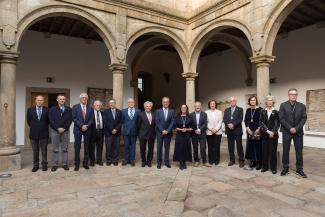
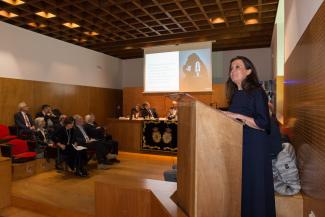
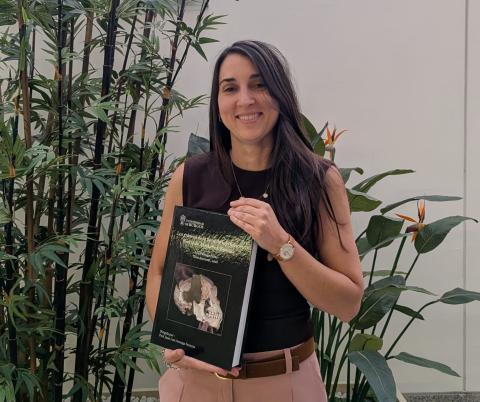
María Martinón Torres, Director of the Centro Nacional de Investigación sobre la Evolución Humana (CENIEH), has today been elected to the Real Academia Galega de Ciencias (RAGC) as a corresponding member of its Biology and Health Sciences section, in a ceremony held at the Pazo de San Roque in Santiago de Compostela, where she emphasized science as a key tool for understanding the human condition.
The ceremony, opened by RAGC President Juan Lema, brought together leading institutional representatives, academics and scientists from across Galicia, marking the recognition of one of the most prominent figures in human evolution research today.
Lema highlighted Martinón Torres’ commitment to knowledge and her ability to communicate science to society, stressing that her work helps shed light on human evolution as a way to better understand the present. Ángel Carracedo, who delivered the laudatio, praised her outstanding career and recalled her early vocation for Atapuerca, where she has built an internationally recognized career in paleoanthropology.
“Being admitted to this Academy today is a profound honor, a recognition I am deeply grateful for. At the same time, it is both a stimulus and a commitment to what has driven me from the very beginning: science,” said the newly elected corresponding member.
Between medicine and evolution
In her inaugural lecture, focused on the dialogue between medicine and evolution, Martinón Torres reflected on what defines our species. She noted that “in a world shaped by uncertainty, science allows us to engage with the present more clearly, moving beyond oversimplified views.”
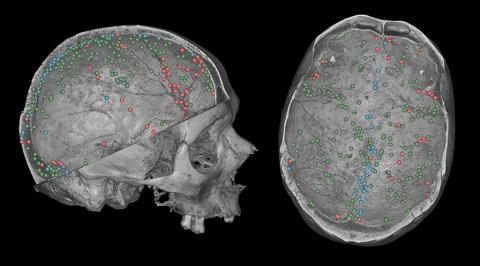
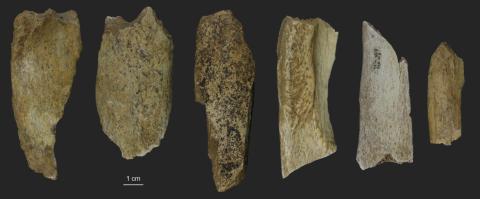
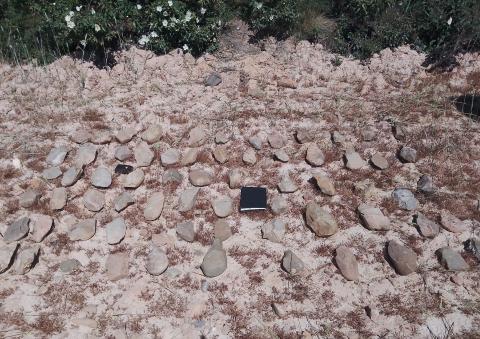
Drawing on the fossil record—particularly from the Atapuerca sites—she illustrated how human remains preserve evidence of both interpersonal violence and long-term care for vulnerable individuals. “Atapuerca is a unique laboratory, an extraordinary setting to explore the origins of compassion, vulnerability, resilience, and the complexity of human relationships,” she stated.
Her admission to the Real Academia Galega de Ciencias acknowledges a scientific career closely linked to CENIEH and the Atapuerca sites, in a ceremony that brought together the scientific and institutional communities and fostered reflection on human evolution and what it reveals about our own species.